
Breaking Down Operational Silos
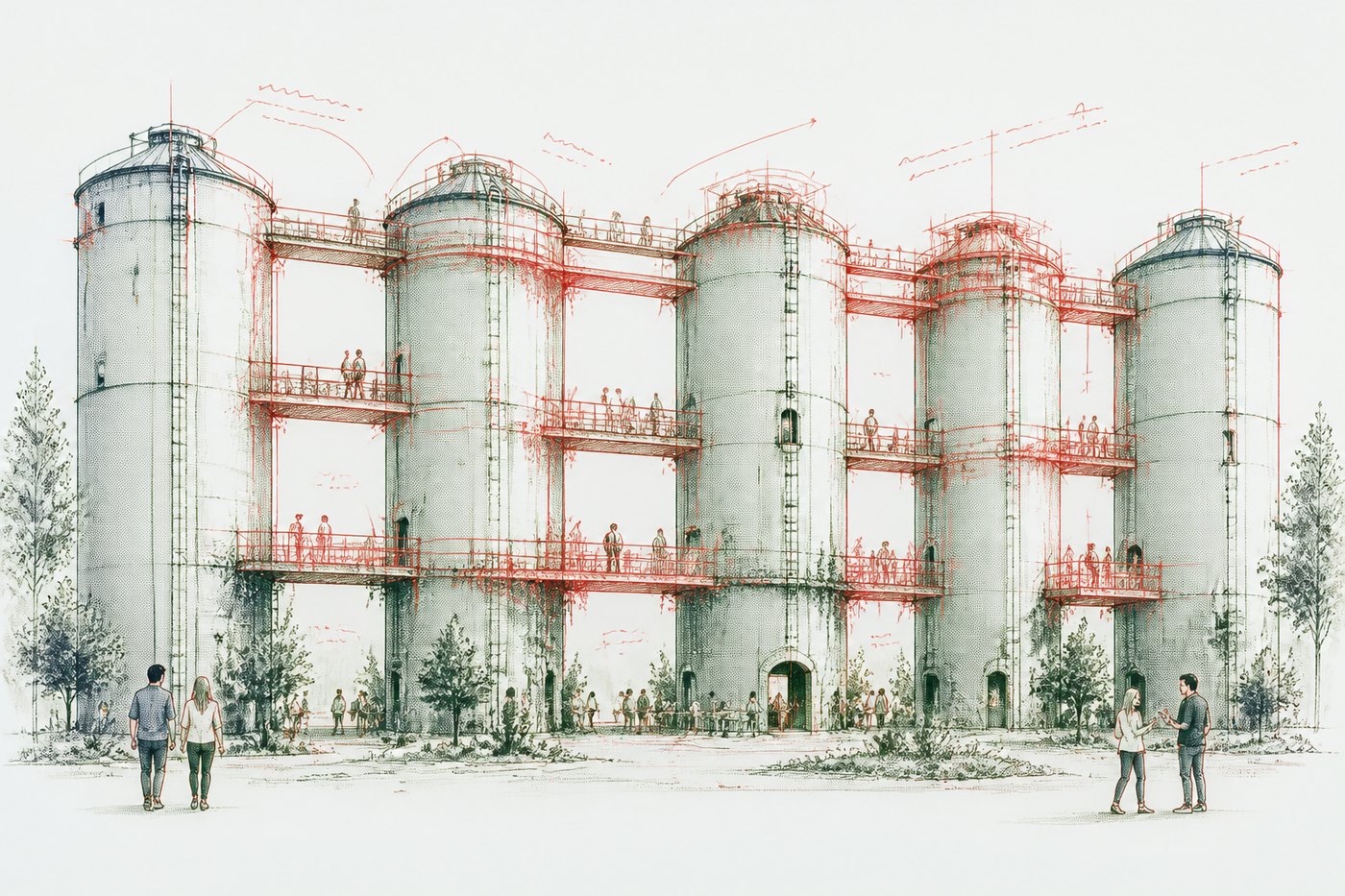
Operational efficiency matters. Yet many organisations run on fragmented systems and departments that barely speak to each other. The result is duplicated effort, missed opportunities, and a business that works hard without working together. If you are the person asked to change that, the silo is your first obstacle and your clearest opportunity.
Why silos quietly drain the business
Operational silos are a familiar villain. They put walls between departments, so communication breaks down, collaboration stalls, and work gets done twice. Three problems tend to follow. Communication suffers, because teams operate in isolation and misunderstand each other. Efficiency suffers, because redundant processes waste time and money. And opportunity is lost, because siloed departments never pool what they collectively know. None of this shows up as a single dramatic failure. It shows up as friction everywhere.
Why technology is the lever, not the answer
Technology can dissolve those walls, but only when it is used to join things up rather than to speed up the pieces in isolation. Integrate the systems and the processes, and information flows across the business instead of pooling in each department. Communication improves because teams share the same view. Workflows streamline because automation removes the redundant steps. And decisions improve because people are working from real, current data rather than last month's guess. The technology is the lever. Leadership is what actually moves the business.
Why our approach starts with a shared model
At Redgum we treat the silo problem as a visibility problem. Our work centres on giving every department end-to-end sight of the same operation.
- We build a digital twin of your business: a consistent model that predicts outcomes from current data and gives every department one reference point.
- Our Redprint process defines the software requirements upfront through deep collaboration, so the solution matches the way your business actually needs to work.
- We deliver iteratively, releasing minimal viable components in sequence. That reduces investment risk and lets the solution evolve alongside your strategy.
We saw this play out with News Limited, where we built a digital twin of their newspaper operations: every page, advertisement, colour and press configuration in one model. Sales could query open spaces and plan placements months ahead. Production optimised press configurations and reduced cost. Every department finally shared one view of the operation, and coordination followed.
Why the change agent carries this
Systems do not integrate themselves, and cultures do not open up on their own. Your role is to champion the join-up and to build the habit of collaboration around it. Assess the current state honestly. Define the future state with the people who live in it. Implement integrated solutions with a partner who understands both the business and the software. Then keep feeding the loop of collaboration and improvement so the walls do not quietly rebuild.
Breaking down silos is not a technology project with an end date. It is a shift in how the business sees itself. Give people one shared view, and they stop guessing and start deciding together.