
Don't Just Automate Your Processes: Transform Your Business
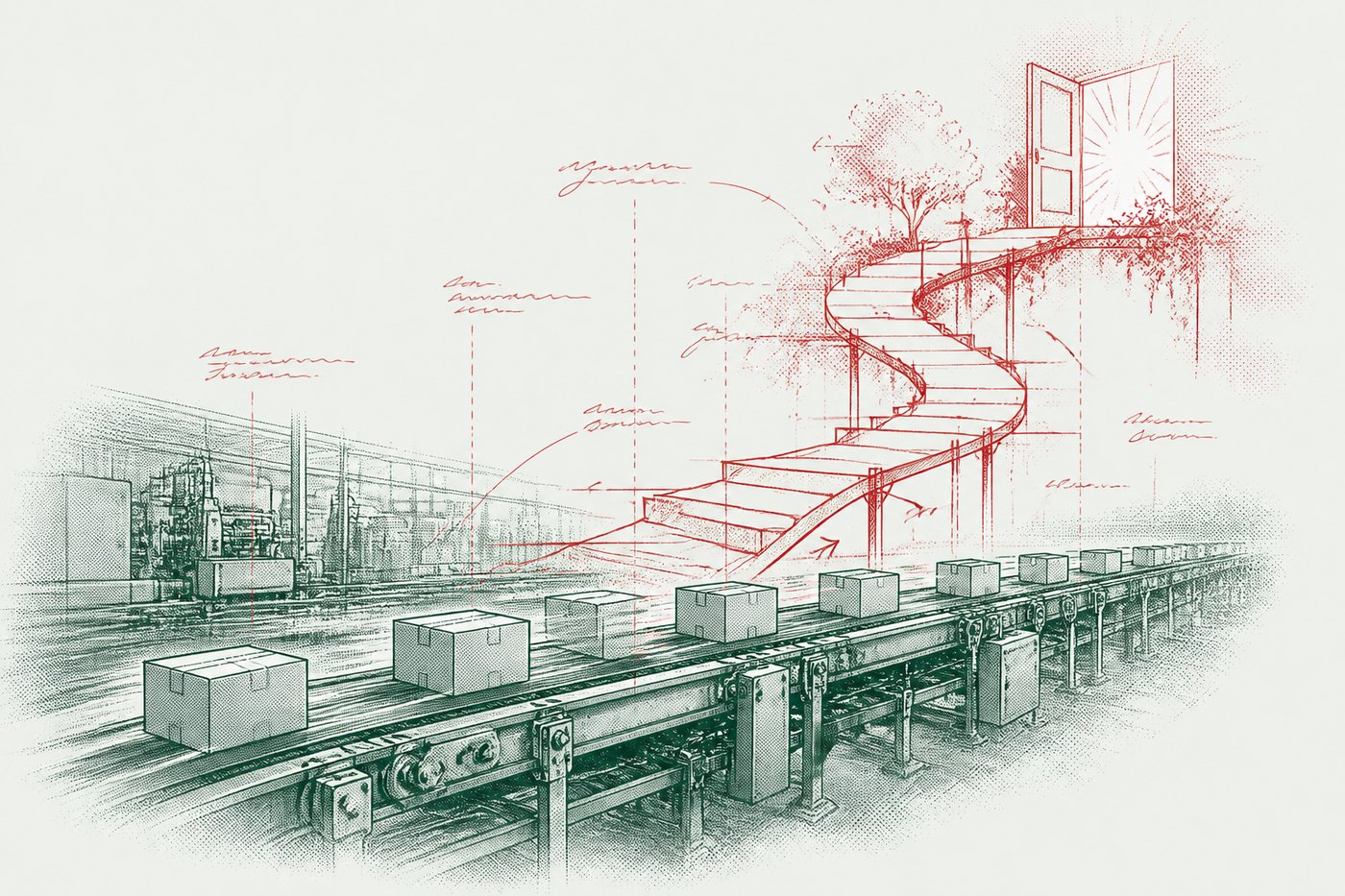
Most companies begin a software project with the same question: how do we make our existing processes more efficient through automation? Efficiency is worth having. But that question, on its own, quietly caps what technology can do for you.
Why automating the current state is asking for faster horses
Coding your manual processes into software is like asking for faster horses instead of rethinking transportation with the automobile. You end up with a quicker version of what you already had, and the same assumptions baked in. The biggest business innovations rarely come from incremental improvement. They come from stepping back and challenging how value is created and delivered in the first place. Software is a malleable medium. Approached with the right mindset, it lets you redesign your operating model, your capabilities, and even your strategy, not just your paperwork.
That is why we take a different starting point. Rather than automating your current state, we partner with you to imagine how the business could run in an ideal future state, and then build toward it.
Why we start with the future state, not the feature list
Our Redprint process begins by understanding your long-term goals, your revenue model, and your strategic vision. What future state do you actually want? Only once we agree on that do we map the software capabilities needed to enable it. And we take a whole-of-business view, across the entire value stream, from customer touchpoints through operational execution to the financial flows underneath.
This matters because companies too often trap software inside a single department. The real power comes from using technology to break down organisational barriers and optimise end to end. That is exactly what we helped News Limited achieve. By modelling their full newspaper production process as a digital twin, we gave them visibility into layout, ad bookings, press configurations and more, for every publication, months in advance.
Why integration turns efficiency into transformation
What began as an effort to make the layout process more efficient became a catalyst for genuine change. Departments that had been siloed could now coordinate. Manual steps gave way to automated workflows. The advertising team could see upcoming layouts and sell premium placement proactively. Production could run optimisation scenarios to cut resource use and cost on each print run. Editorial could plan content against the big picture instead of working blind. The impact rippled outward, and the operating model itself became leaner, faster and more responsive to the market.
None of that comes from applying digital lipstick to legacy processes. It comes from aligning on the future state first, then designing software to serve it. Efficiency removes friction from what exists. Transformation builds capability you did not have before.
Do not settle for paving the cow paths of your legacy processes. Treat technology as a way to reinvent how your business creates value.