
Mapping Interactions for Seamless Information Flow
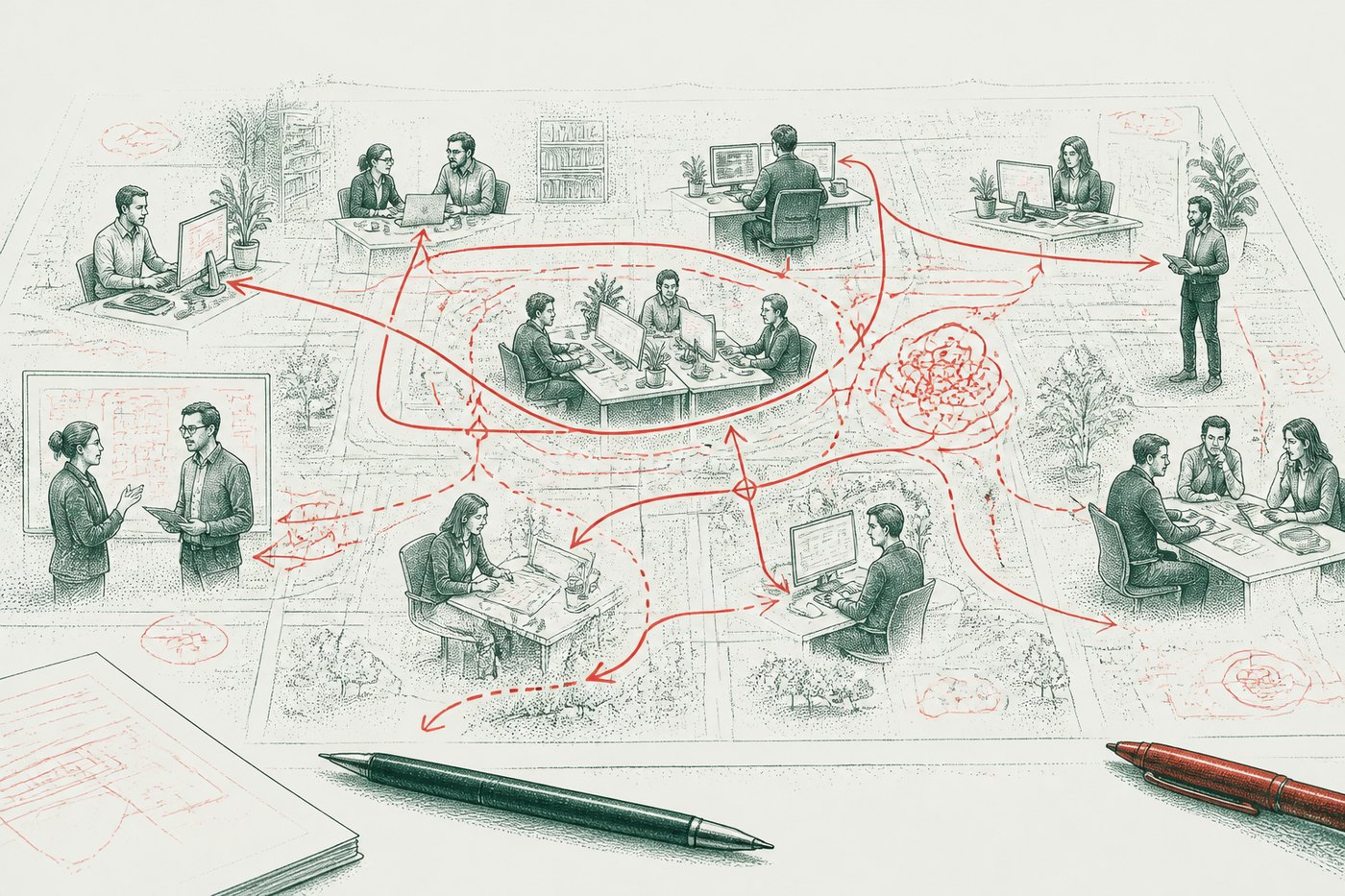
Building a high performing software asset from your own know-how happens in stages. First you learn to see the first order value in what you already do. Then you come to understand the true value you have built over years of practice. The next step is quieter, but just as important: understanding how information actually moves through your business.
When you document know-how, it is tempting to capture the tasks and stop there. Yet the value often lives in the spaces between people, in the handoffs where one role passes work, context and responsibility to another. Map those interactions well and the exchange of knowledge becomes seamless. Map them poorly, or not at all, and information leaks away exactly where it matters most.
Why roles come before process
Start by identifying the roles involved in delivering your solution. Not job titles, but the parts people play: the customer-facing roles, the support staff, the technical experts, anyone whose contribution is critical to the outcome. List each one and the responsibilities it carries. Comprehensive coverage here saves you from surprises later.
Why you should visualise the interactions
Once the roles are clear, map the interactions between them. Follow how information, tasks and responsibilities pass along the chain. Pay attention to the dependencies and the handoffs, and make sure the crucial detail is captured at each step rather than assumed.
As you draw this picture, look for the weak points. Where might communication break down. Where might information be lost or delayed. These bottlenecks and gaps are easy to miss in the daily rush and obvious once they are mapped. Name them, then design the flow so they do not recur.
Why the map is never finished
A role and interaction map is a foundation, not a monument. Review it regularly and refine it with feedback from staff and customers. As you keep assessing and optimising how information moves, collaboration improves, effort falls away, and customers feel the difference in how smoothly they are served.
Mapping roles and interactions gives you a comprehensive understanding of how information and resources flow, both within your organisation and between your people and your customers. It helps you anticipate challenges, coordinate better, and ensure the right information reaches the right person at the right moment.
So as you document your know-how, treat the roles and their interactions as a core part of the asset, not an afterthought. Capture those dynamics and you strengthen communication, coordination and collaboration across the whole business. That is what turns documented knowledge into something a platform can carry.
Good know-how is not just what you do. It is how it moves.