
People-First Technology: Why Adoption Is Designed, Not Demanded
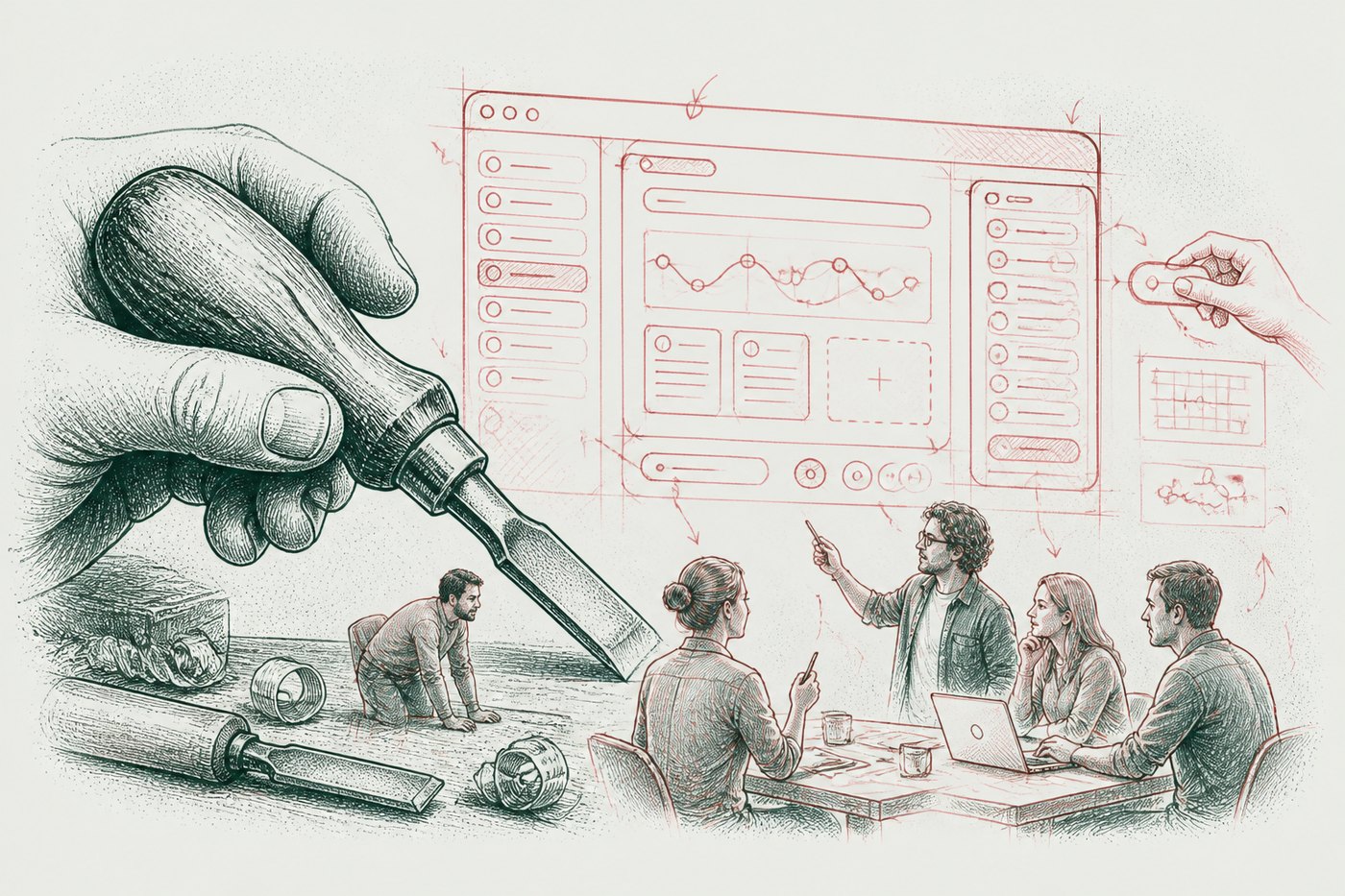
Technology on its own doesn't build capability. People do. Yet most implementations start with the system and hope the people come around. Then leaders are surprised when the launch lands flat, the workarounds return, and twelve months later half the business is quietly working the old way.
Why the best builds start with what people are good at
The implementations that get enthusiastic adoption — not compliance, adoption — start from a different question. Not “what should the system do?” but “what are our people genuinely good at, and what grinds them down every day?”
When you identify the work people are proud of and eliminate the daily grind that surrounds it, the system arrives as a gift rather than a threat. The bookkeeper who spends three hours re-keying data doesn't resist the system that frees those hours; she champions it. Adoption isn't a training problem to solve after the build. It's a design decision you make before it.
Why involvement beats announcement
If the people who use the system aren't involved in shaping it, it becomes someone else's project. Adoption becomes resistance. This is why we build with your people, not around them: the operators who know where the real exceptions live, the coordinators who know which handoffs actually break. Their fingerprints on the design are what make it theirs on launch day.
Involvement also produces a better system. The gap between how a process is documented and how it actually runs is where most software fails. The people doing the work are the only reliable map of that gap.
Why learning cultures beat political ones
There is a second, quieter test of whether capability will last: what the organisation does with an imperfect release. Some turn it into political ammunition — proof that the project is failing, that the sceptics were right. Those organisations stall, because every discovery becomes a risk to someone's position.
The organisations that build lasting capability treat discovery as part of the cycle: “That's fine — now we've learned. What's next?” Same imperfect release, opposite outcome. The difference isn't the technology or even the talent; it's whether learning is safe.
Capability building is a people process wearing a technology costume. Start with what your people are good at, build with them rather than for them, and make learning safe — and the technology part turns out to be the easy bit.