
Scaling Your Business Through Technology
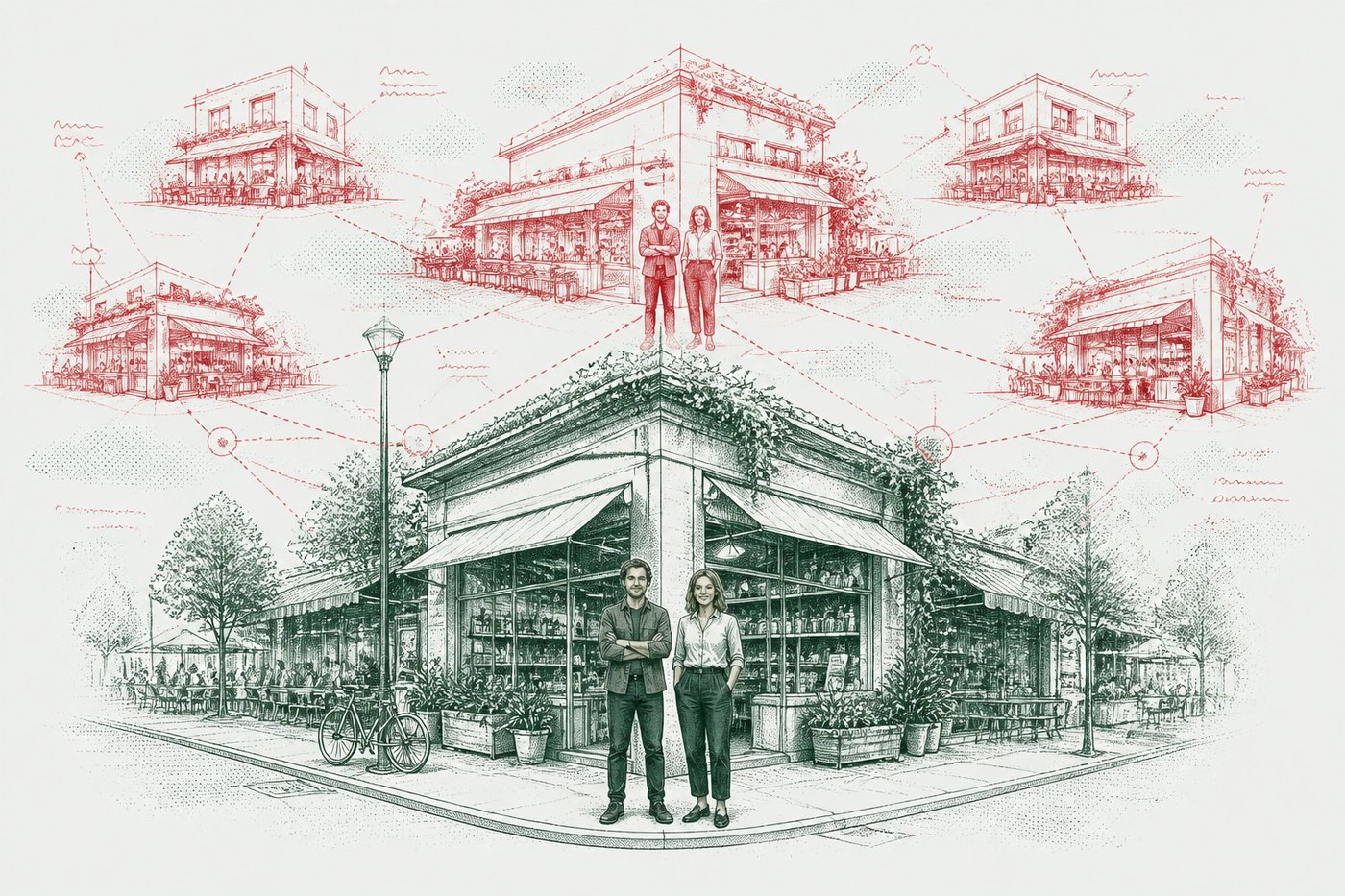
One word tends to surface whenever growth is on the table: scalability. It is easy to treat it as a buzzword, but it describes something quite specific. Scalability is the capacity to expand your customer base and your capabilities without a matching rise in your overhead. Serve ten times the customers without ten times the staff, the office space, or the hours. That is the difference between a business that grows heavier as it grows, and one that grows stronger.
Why scalability changes the economics
When a business scales well, costs stop tracking growth in a straight line. The cost to serve each additional customer falls, and the margin you keep on each one rises. Three shifts tend to follow.
The first is a shift in where leaders spend their attention. Growth often stalls when the people running the business are trapped inside its daily operations. A platform that carries the routine work frees them to work on the business rather than only in it, which is where strategy and innovation actually happen.
The second is margin. With the right technology absorbing manual, repetitive tasks, the cost of each transaction drops and operational efficiency climbs. The third is flow. When your systems can take on more customers without any loss of quality, the whole operation benefits at once: people are more productive, customers are better served, and the business keeps the difference.
Why spreadsheets eventually hold you back
Most companies begin with spreadsheets, process documents, or low-code tools, and for a while those tools do the job. They are excellent for proving a concept and getting moving. The trouble comes at scale. They were never built to serve hundreds or thousands of customers, and they lack the automation and integration that modern operations depend on. That gap leaves room for human error and quiet inefficiency to accumulate.
This is the line between efficiency and capability. A tidier spreadsheet removes friction for a time. A platform designed to scale from the outset adds strength you can keep building on. Deciding to build for scale early saves time, money, and a good deal of avoidable pain later.
Why scaling is a strategic act, not just an operational one
A scalable platform does more than help you grow. Done well, it changes what the business is capable of. Automating low-level tasks lets your team turn their attention to higher-value work: to innovate, to strategise, to serve customers more thoughtfully. The model also loosens the constraints of time and geography. Your services become available around the clock, from anywhere, which opens markets that were previously out of reach.
At its most ambitious, this is where new revenue streams appear and where the dynamics of an industry can shift, as businesses change how and when customers and suppliers interact with one another. Getting there rarely happens alone. It helps to assemble specialists the way a film crew is assembled: strategy, branding, technology, and delivery brought in at the right moment and in the right sequence, so you are not simply growing but transforming with intent.
Scalability is not only an operational concern. It is a strategic one. With the right tools and the right partners, the business you can build is a larger one than the business you have today.