
Succession Readiness: The Ten-Minute Self-Check
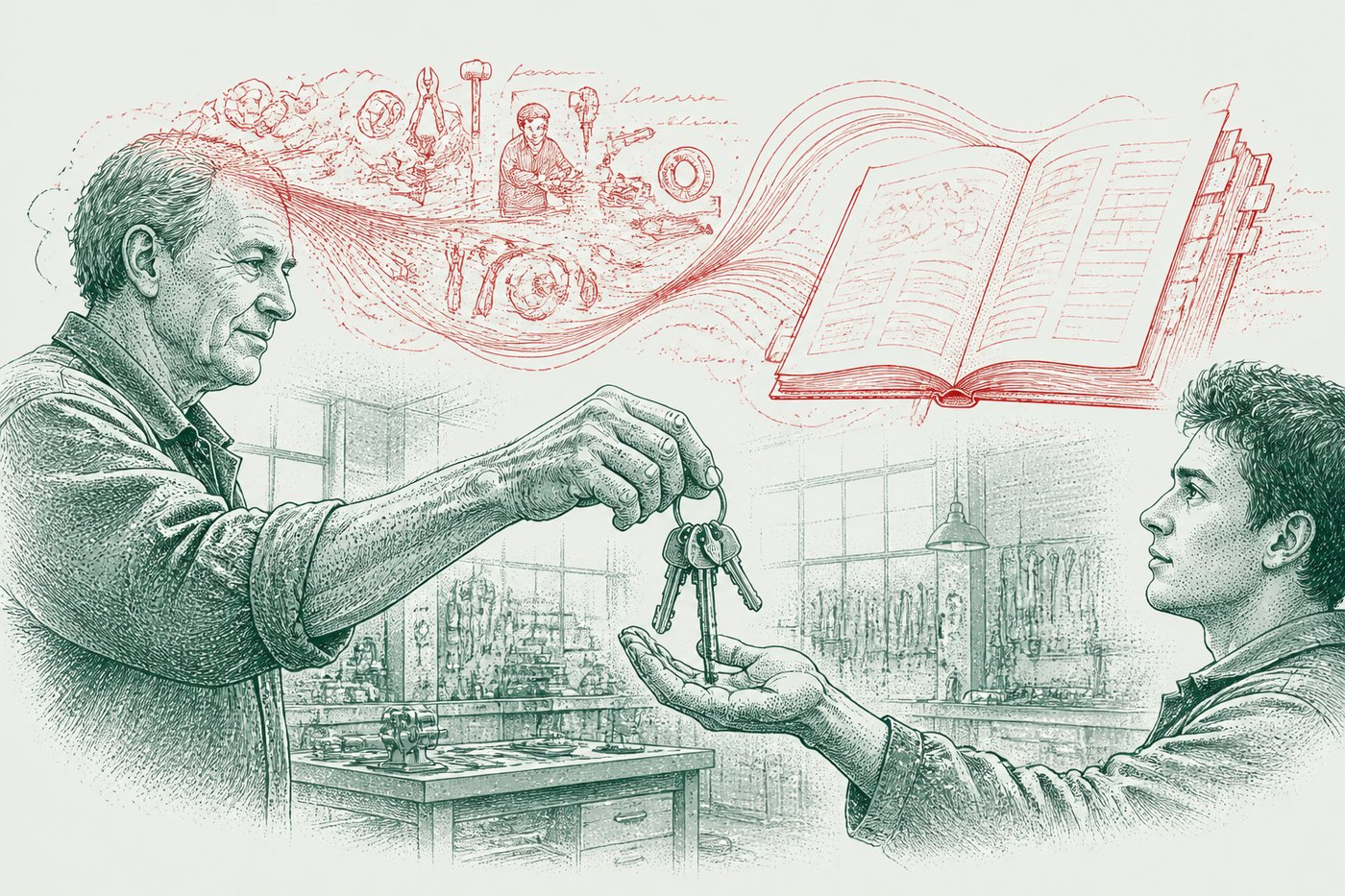
You already know succession matters. You've thought about it, talked about it, maybe lost sleep over it. But here is the question that separates planning from progress: could two people do this week what one person did last week?
If the answer is no, you haven't started yet. You've been thinking about starting. This self-check takes ten minutes. It won't fix everything, but it will show you exactly where to begin.
Why businesses run on memory without noticing
Second-generation leaders often inherit businesses that work because one person holds everything together in their head. It's a credit to that person — and it's a structural weakness that gets harder to fix the longer you wait. The knowledge is real; it's just uncaptured. Succession isn't about replacing the person. It's about building systems that preserve what they know while enabling everyone else's independence.
The self-check
Run through these ten items with a pen. Circle the ones that make you uncomfortable — those are your starting points.
- Single-person dependencies. List every workflow that stops — not slows, stops — when one specific person is unavailable.
- Decision bottlenecks. Which decisions require your sign-off out of habit rather than risk?
- Undocumented thresholds. Where does the team make judgment calls from experience rather than a written rule — pricing, exceptions, escalations? If the answer is “they just know,” it isn't written down.
- Tribal knowledge. What takes a new starter six months to absorb that a two-page guide could capture?
- Handoff fragility. At which junctions between teams does information get lost, repeated or delayed?
- System workarounds. Count the spreadsheets, side-notes and “just ring me” steps sitting outside your core systems.
- Customer-facing exposure. Which client relationships depend entirely on one person's rapport?
- The holiday test. If you disappeared for five business days with no phone, what breaks first?
- Recovery time. When something goes wrong, does getting back to normal depend on who happens to be available?
- Next-generation readiness. Could your successor explain your three biggest weekly decisions to someone outside the business?
Why the circles matter more than the score
One or two circles is normal; every business has a few. Three to five means concentration risk: the business works, but it depends on specific people being present, and growth will stretch those dependencies until something gives. Six or more means the business is running on memory and goodwill.
Pick the circled item that scores highest on two measures: how often it comes up in a normal week, and what happens when it goes wrong. Start there. Capture the decisions involved, write down the thresholds and exceptions, test it with the people who do the work, and release it as a small, usable guide.
You don't need a transformation program. You need one captured workflow, tested by one team, delivering one measurable improvement. That's how succession actually starts: not with a strategy document, but with a decision written down and a person who can follow it without calling you.