
Tailoring Software Development for Transformational Success
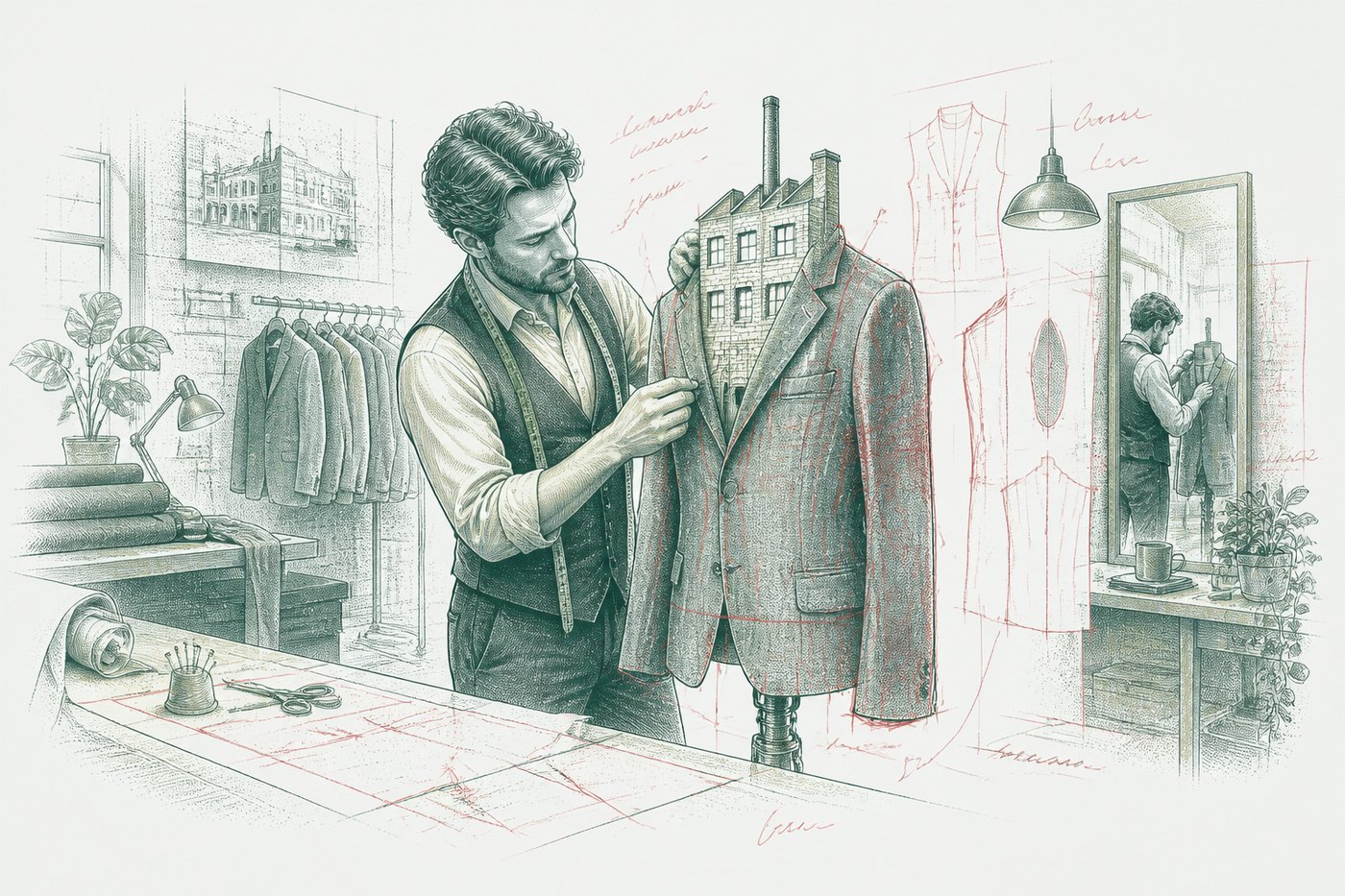
The one-size-fits-all approach to software is a relic. If you are the person charged with driving real operational change, the way software gets built matters as much as what gets built. A tailored approach is not a luxury. It is the difference between software that meets an immediate need and software that carries a transformation.
Why one size never fits all
Every organisation carries its own risk profile, and that profile should shape how software is made. A startup can afford to move fast and adjust on the fly, because it is often both the developer and the customer. A larger organisation, especially one with external clients of its own, needs a more measured path built on deep collaboration and a genuine understanding of the business context.
So the process should be tailored to the kind of engagement it serves. For a startup, the priority is speed and agility. For a mid-market company, it shifts to close collaboration and alignment with long-term goals, so the software meets today's needs and still supports tomorrow's growth.
The generic approach tends to fail for one reason: it operates in an echo chamber. Developers assume they already know what the customer needs, without truly understanding the business they are building for. Effort is wasted and the solution falls short of what was possible. Offshore teams often feel this most sharply, where contextual and cultural distance from the client widens the gap.
Why deep collaboration is the real work
A developer makes thousands of micro-decisions on a customer's behalf. If they do not understand that customer's strategy and objectives, the odds of making those decisions well are very low. That is why the customer belongs in the room from strategy through to execution, not just at the requirements stage.
This is also how you break down operational silos. The aim is a complete view of the operation, from customer intake through to delivery and payment, so work can flow across the whole enterprise rather than stalling at each internal boundary. That flow is where efficiency and cost savings actually live.
At Redgum, this shapes how we work. The Redprint process defines requirements upfront through close customer collaboration, producing a detailed roadmap that can flex as things change. The Deliver process keeps customer and developer aligned, agreeing on each component before it is built. Measure twice, cut once. It is a simple discipline that removes the largest risk in any build: the risk of building the wrong thing well.
Why iterative delivery protects your investment
Rather than a single large bet, capability is delivered in minimal viable components, one after another. Each increment reduces the risk on the build, and because each one is tuned to the overarching strategy, it starts paying its own way in greater income or savings. The capital burden falls, and value compounds as the pieces come together.
There is a longer game here too. For a company looking to lift its valuation before an exit, the future state can be modelled and built out over months or years, aligned to the exit timeframe. Strategic software of this kind raises valuation and widens the field of potential buyers, which improves the odds of a successful sale.
Tailoring the approach to the engagement and the risk profile is what makes transformation possible. Deep collaboration, alignment to strategy, and iterative delivery are not process for its own sake. They are how software stops being a cost and starts being capability the business can keep.