
Warning Signs Your Business Operations Need Digital Transformation
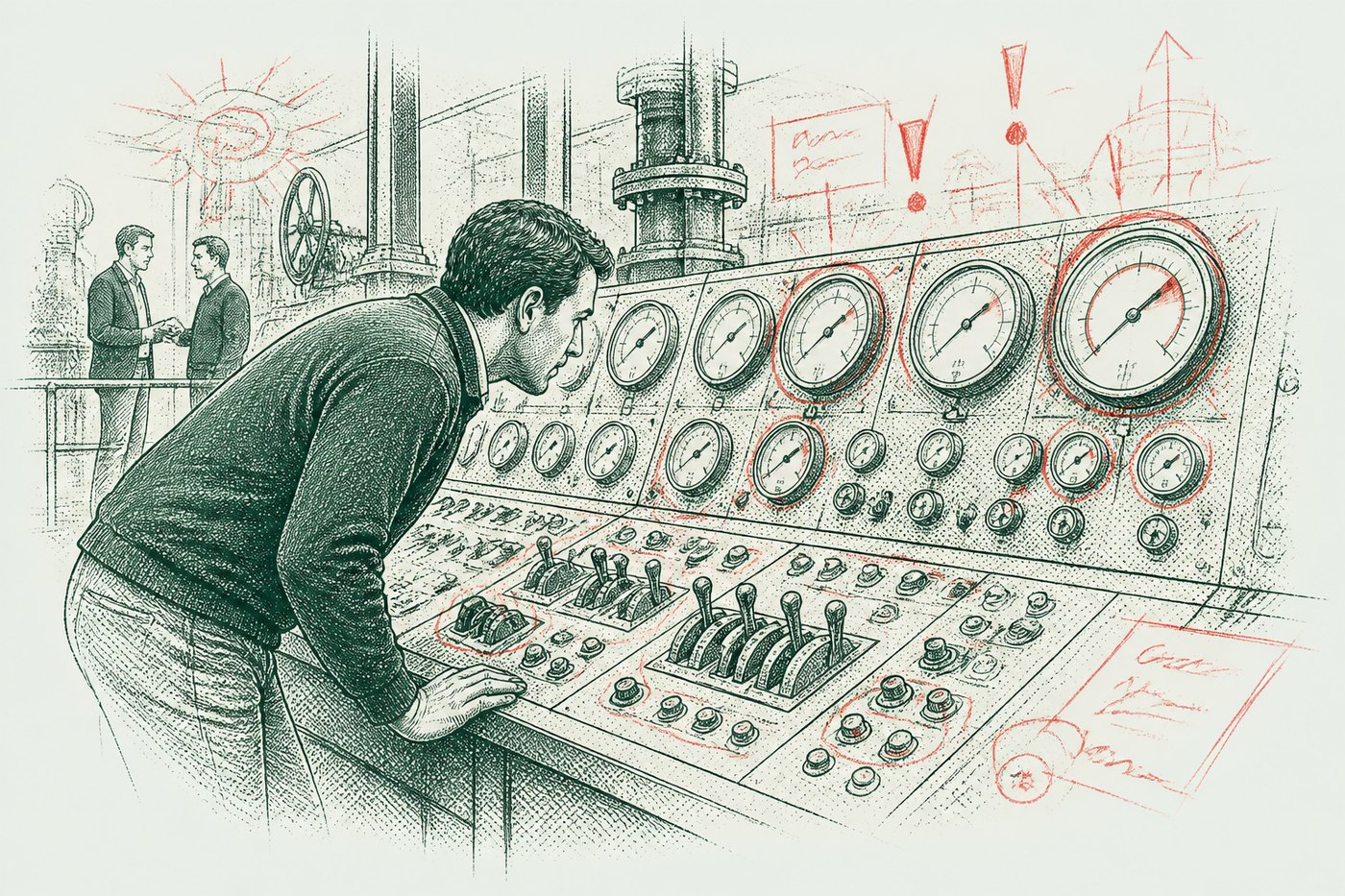
Is your business struggling to keep up with growing demand? Are your teams constantly firefighting instead of focusing on growth? These are not just bad weeks. They can be the clearest signs that your operations have outgrown the way they are run. The warning signs are usually there long before anyone names them. The work is to recognise them for what they are.
Why the growing pains are worth reading closely
The symptoms tend to show up in three places, and they compound.
The first is friction between departments. Teams start pointing fingers, and a blame culture takes hold. Leadership begins to feel like it is refereeing rather than managing. That friction is rarely about the people. It comes from fragmented processes and a lack of transparency, where no one can see the whole picture, so everyone defends their part of it.
The second is the customer feeling it. Deliveries run late. No one can say clearly where an order is. Complaints mount. These are signals that manual processes can no longer keep pace with what customers expect.
The third is your own people carrying the strain. They spend hours on paperwork and manual data entry. They apologise for the limits of the systems they have been given, and quality gets harder to hold as volume climbs. When your best people spend their days working around the system instead of with it, the system has become the problem.
Why standing still is the expensive option
It is tempting to treat these as the cost of being busy, something to push through. But staying with outdated methods is not just frustrating, it is expensive. Duplicate data entry drains productivity. Errors creep in and require costly rework. Good staff leave because the work wears them down. Opportunities for growth pass by while you are occupied keeping up, and competitors who have solved these problems pull ahead. The cost of doing nothing is real. It is simply spread out where it is harder to see on a single line.
Why transformation is the path forward
Digital transformation is not about swapping paper for screens. It is about reimagining how the work is done so it can hold up as you grow. Done well, it answers each of these warning signs directly.
It brings consistency. Digital systems guide teams through standardised workflows, so quality holds regardless of volume and the variability of manual work disappears. It brings visibility. Modern platforms give immediate insight into operations, which lets you manage ahead of problems rather than react to them. And it brings the ability to scale. You can take on more business without adding headcount in proportion, because the system handles the routine and frees your people for the work that actually adds value.
This is the shift from efficiency to capability. Removing friction is the start. Building a business that can carry more weight without straining is the return.
Why you start small, not all at once
The mistake is trying to change everything at once. The better path is deliberate. Identify your most painful operational bottlenecks. Map your current processes and how they affect your ability to grow. Prioritise the areas where transformation will deliver the quickest wins, so the value is visible early. And engage partners who understand both the business and the technology, not just one side of it.
The warning signs are not subtle once you know them: friction between departments, delays reaching your customers, and people worn down by the work. The real choice is not whether to transform. It is how soon you begin.
If the signs are there, the business is already telling you what it needs. The task is to listen.