
Maximising Company Value: Build a Business That Runs Without You
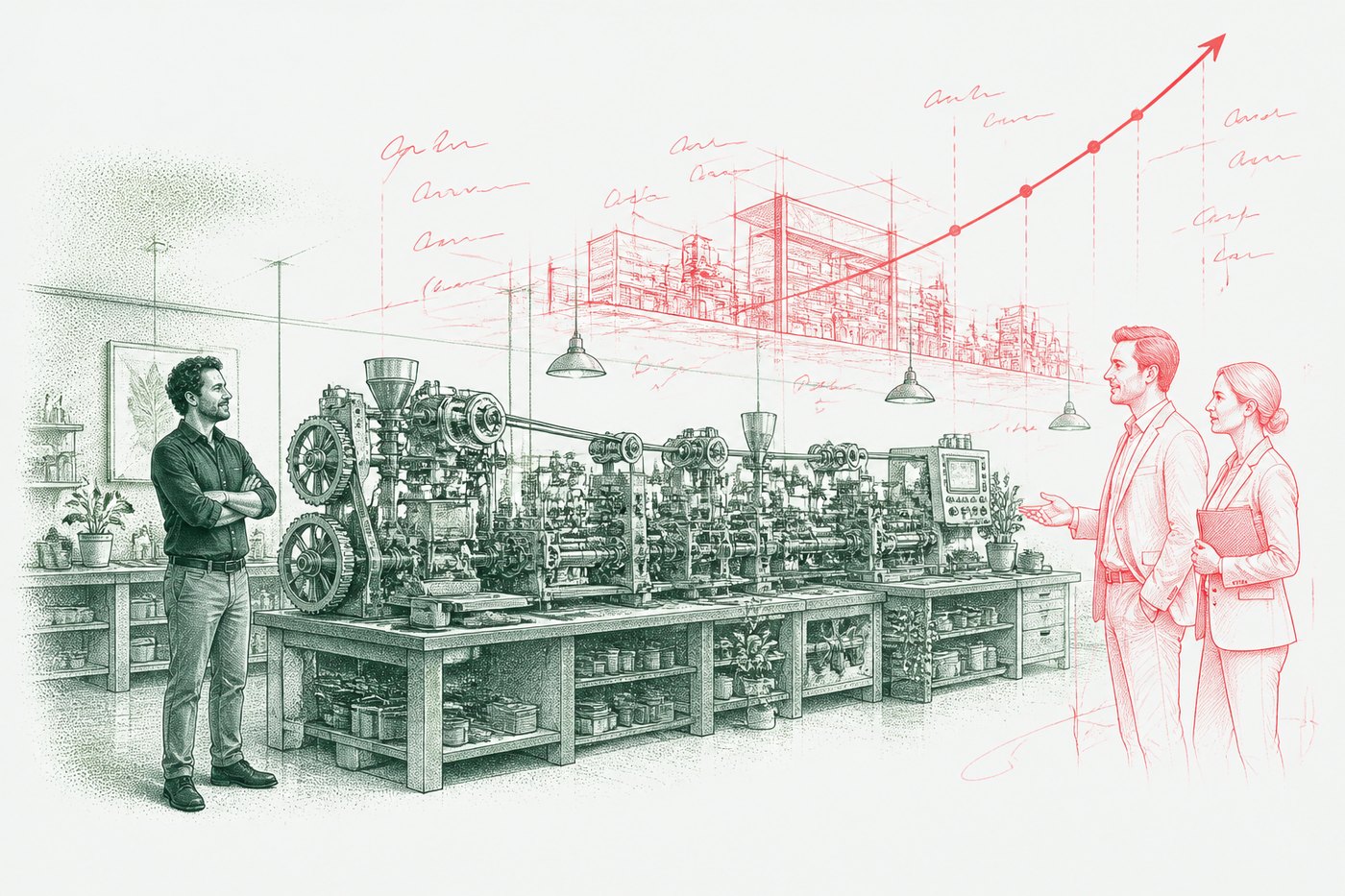
Every owner eventually faces two questions, whether the buyer is an acquirer, their own management team, or the next generation of the family: is this business worth what I'm asking, and can it run once I'm gone? Most owners meet those questions for the first time in the room where the price is set. The ones who get the price they want answered them years earlier.
Why every buyer asks the same question
Buyers vary; their doubts don't. Can this business scale if we invest? Where will it bottleneck? What are we actually buying — and if we remove the owner and their core people, what's left? Every question is a version of the same one: how much of this business lives in systems we can keep, and how much lives in heads that are walking out the door?
If there's existing software, the same doubt just changes shape: will this system help us or hinder us, can it be extended, is it documented, does anyone still know how it works?
Why knowing everything is the problem
Here's the scene that quietly caps your price. The buyer visits. They ask how things work, and you answer brilliantly — every process, every exception, every judgment call, because after decades you know it all. By the end of the session you've proven complete mastery of your business. And their head is swimming. All they can see is how much depends on you “just knowing” — and how often they'll need you on the phone after you've gone. Your expertise, the thing that built the business, has just become their risk.
Why value climbs in steps
The path out is the same capability ladder we build everywhere, and each rung visibly changes what a buyer sees.
Solid processes. The same questions get asked, but now the system answers them. The buyer's head is still full, but their confidence is different: they can see that more customers means safely adding staff, not chaos.
The plan. Behind the working system sits its blueprint — the schema, the documentation, the map of how it all fits. Now their developers can see where change happens and what it touches. Pair that with a modest handover arrangement — half a day a week of your judgment while the build completes — and the knowledge in your head stops being a deal risk and becomes a transition plan.
The business operating system. The system is built, bedded down, and your own staff run on it comfortably. The buyer can see the thing they came hoping to find: growth in customers no longer drags growth in headcount behind it. That's a scaling advantage, and buyers pay for it.
Why the path pays even if you never sell
Here's what makes this an insight rather than a sale-preparation service: a valuation is just an audit of capability. Everything a buyer wants from your business is something worth having while you own it. The business that can run without you gives you back your weekends now, not just at settlement. The captured know-how survives a key person leaving, whatever the reason. The operations that scale gracefully serve your growth just as well as a buyer's. Prepare-to-sell and build-to-last turn out to be the same work.
We watched this play out with a payroll services owner working 60 to 80 hours a week, managing every client through Word documents, email templates and spreadsheets he alone understood. His staff wanted to buy the business; his working pattern made it unbuyable. The system we built captured how he worked — clients entering their own updates, routine runs submitted automatically, staff handling only the outliers. The buyout went ahead at a price that suited both sides, because the buyers could finally see what they were buying. Read the Payrite case study →
Build the business as if you'll sell it. Whether or not you ever do, you'll own something better: a business that's valuable because of you, but no longer dependent on you.