
The Discovery Investment: Map Before You Build
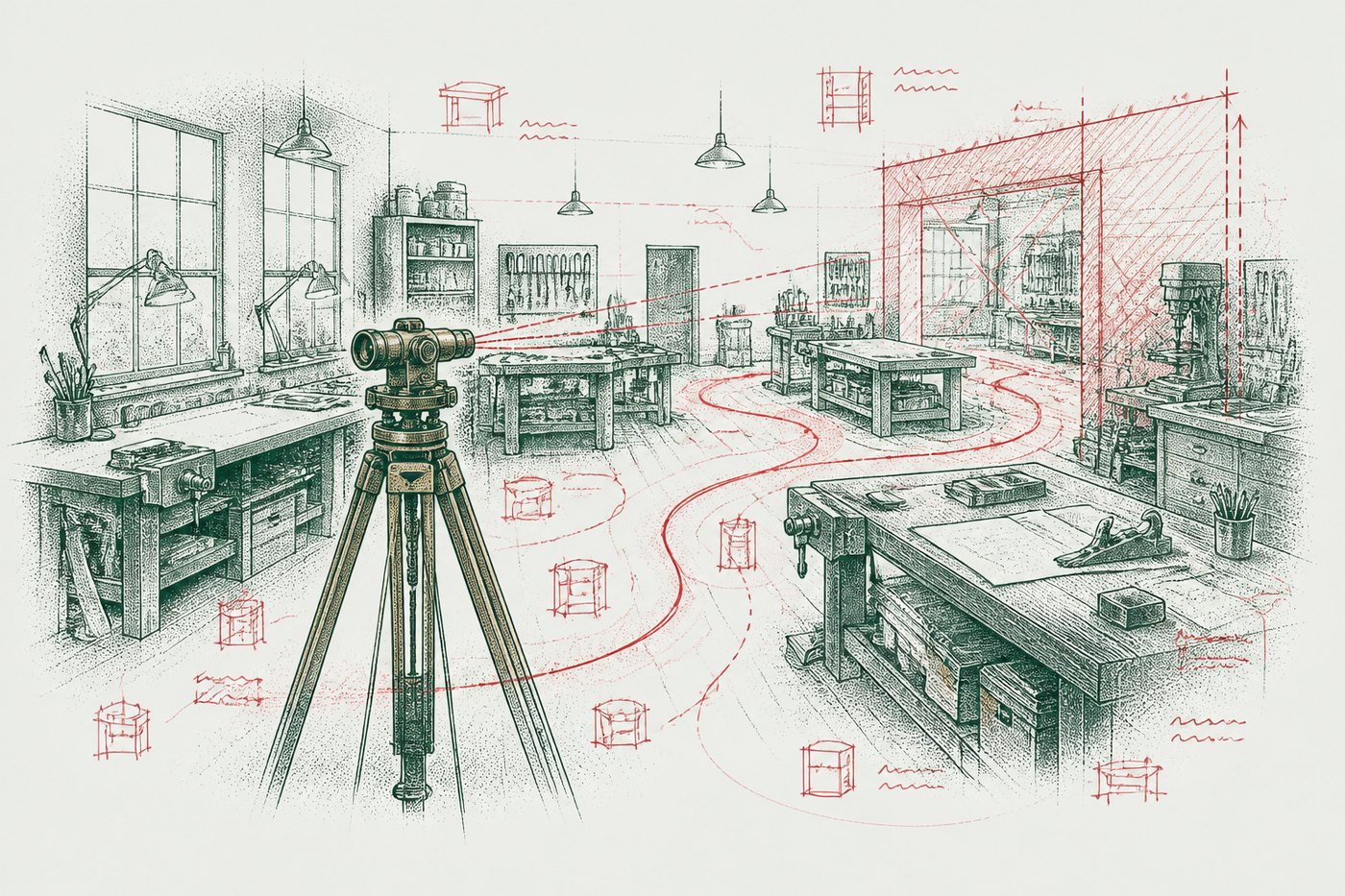
Most businesses arrive wanting a solution. Build us the portal, the app, the integration. The specific request is almost always sincere — and almost always premature. Because underneath every requested solution is an assumption about what's actually happening in the business, and that assumption is usually part right, part folklore.
Why discovery is an investment, not a delay
Smart capability building starts with a small investment in discovery: mapping what's actually happening versus what everyone believes is happening. Who really talks to whom. Where information actually flows, and where it's carried by one person's memory. Which steps exist because they're needed, and which exist because they've always existed.
This feels slower. It isn't. Automating the wrong thing just gets you to the wrong place faster — and then you pay twice: once for the build, and once for the unwinding. Discovery is the cheapest phase of the entire journey in which to be wrong.
Why half the problems disappear on the map
Something reliable happens when you map how the business actually runs: a good share of the “efficiency problems” dissolve before anything is built. The report nobody reads stops being a candidate for automation and becomes a candidate for deletion. The approval step that exists because of an incident in 2011 gets retired. The real constraint — often invisible from any single department — finally shows up, sitting in a handoff nobody owned.
That's why capability building starts by questioning whether a process should exist at all, not by making it faster. When you map what the end customer actually needs and how departments should work together, you frequently discover the best build is smaller, different, and more valuable than the one first requested.
Why the slow start produces the quick wins
Here's the paradox: taking time for proper discovery delivers quick wins sooner, not later. The map shows you where the highest-value, lowest-cost first build actually is — which is rarely where instinct pointed. So the first release lands earlier, works properly, and matters visibly. Rushing straight to solutions produces the opposite: a fast start, a long middle, and a quiet abandonment.
We use a simple tool for this — the Business Landscape Map, a shared picture of your people, systems, customers and processes that everyone can read and contribute to. It's the first tool in the Building Capability book, and it's free, because in our experience it's the step nobody should skip.
Before you decide what to build, invest in seeing clearly. The map is cheaper than the wrong building.