
Why Small Wins Beat Big Transformations
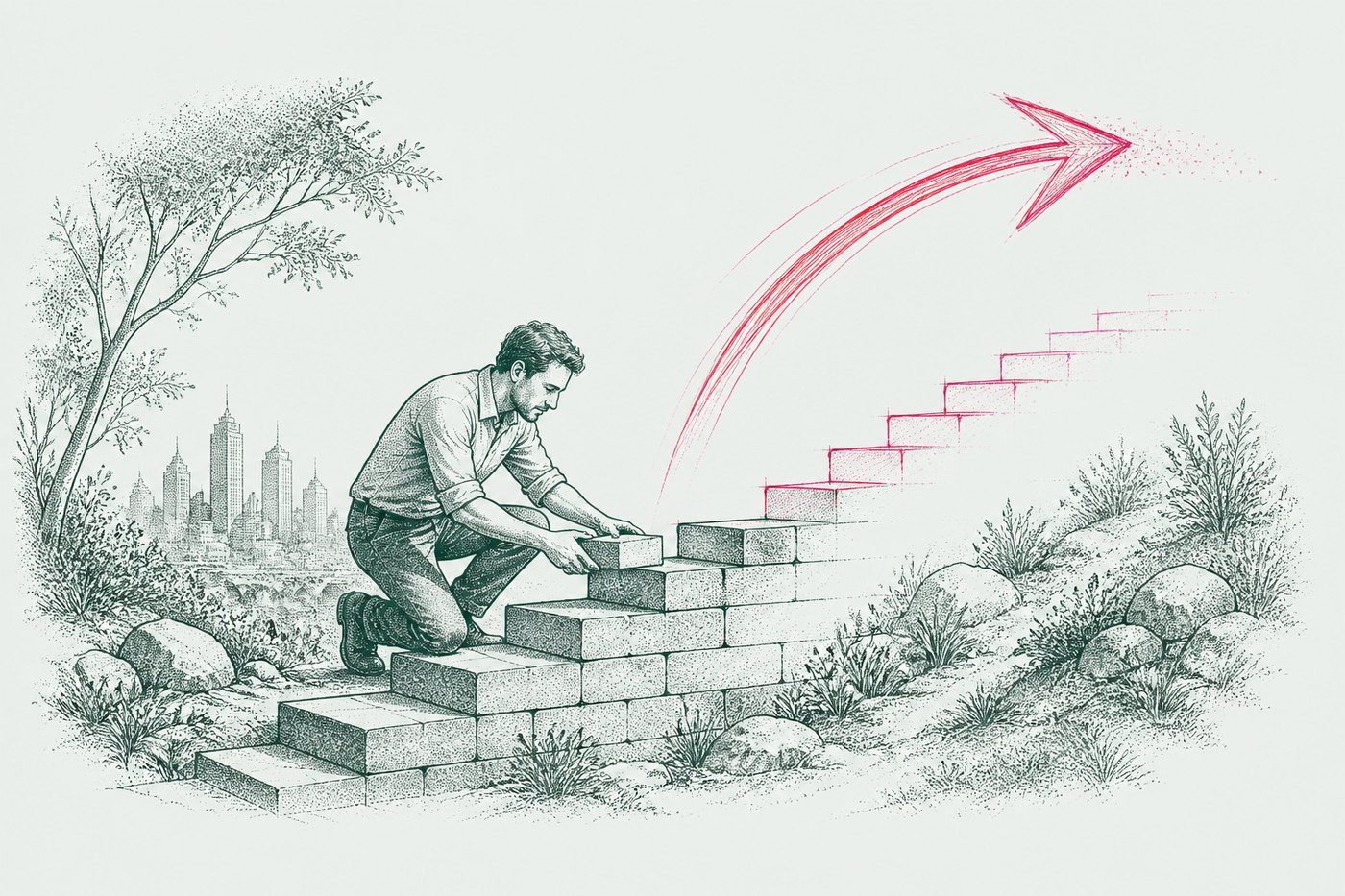
The transformation industry sells scale: the comprehensive overhaul, the eighteen-month program, the new operating model. It sounds ambitious, and ambition is appealing. But in thirty years of building systems we've watched a quieter approach win again and again: start with the highest-value, lowest-cost proof of value, and let each layer unlock the next.
Why the first build should be almost embarrassingly small
A proof of value is the smallest build that delivers a measurable improvement. Not a pilot, not a prototype that gets thrown away — a real, working piece of the business that makes one thing demonstrably better.
The point is not modesty. The point is belief. Proof of value isn't just validation of a technical idea — it's validation of belief. The first small win shows your people, with their own eyes, that change here works. That belief is the raw material every later release is built from. A big transformation asks everyone to trust a plan for a year before anything changes. A small win asks them to trust it for weeks, then pays them back.
Why each layer unlocks the next
Capability compounds. Lilydale Books is the example we return to because the arc is so clear. The first build did something unglamorous: it organised the back office. But once booklists lived in a system rather than in filing and memory, the next step became possible — teachers building their own lists, starting from last year's instead of from scratch. And once teachers were in the system, so was the step after that: students nominating subjects, parents ordering the complete, correct list online.
None of those later releases could have been built first. Each one stood on the layer before it. A business that had served 10 schools for over 30 years now delivers books to tens of thousands of students across more than 40 schools — and the growth came release by release, not in one heroic leap.
Why big transformations stall
The comprehensive overhaul fails for a human reason, not a technical one. It disrupts everything at once, so the organisation spends its change capacity on coping rather than learning. Nothing ships for months, so belief drains away. And because everything depends on everything, the first wrong assumption surfaces late, when it's expensive.
Small wins respect a constraint that is easy to forget: technology is rarely the bottleneck — the organisation's capacity to absorb change is. Digestible stages keep the business running while it gets stronger.
Start smaller than feels impressive. Prove value. Then build the next layer. Transformation isn't an event you survive; it's a capability you develop — and like any capability, it's built one win at a time.