
The Scaling Paradox: The Systems That Got You Here Are the Ceiling
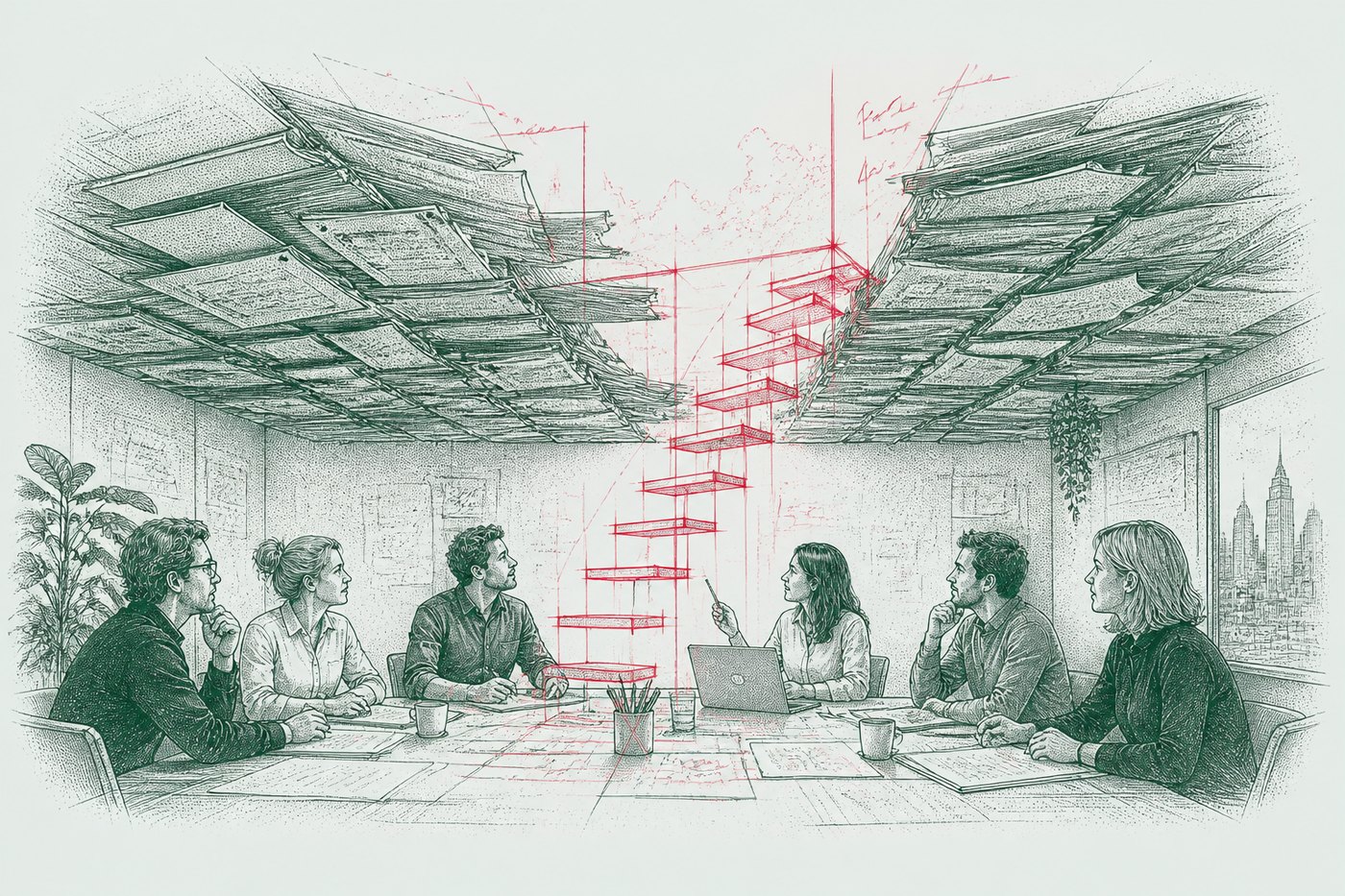
Success creates its own constraints. The coordination methods that carried you to ten million in revenue — the shared spreadsheet, the Monday phone call, the person who just knows — are the same methods that quietly prevent you reaching twenty-five. Nothing broke. That's what makes it hard to see. The business still works; it just stopped scaling.
Why more people is not more scale
When coordination starts to strain, the instinct is to hire. Revenue is up but delivery is chaos, so we need more coordinators. Enquiries are overwhelming us, so we need more service staff. Projects are slipping, so we need more project managers.
Each hire feels like progress, but look at what it actually adds: more handoffs, more context to share, more decisions passing through more hands. You are scaling complexity, not capability. More people is not scale. Fewer decisions is scale.
Why the ceiling is made of decisions
Every routine decision that requires human judgment is a ceiling on your growth. The businesses that scale well don't handle more decisions — they systematically remove decision points from routine work. They don't hire coordinators; they build coordination into systems. They don't add project managers; they design work that manages itself. They don't expand the service team; they eliminate the problems that generate service requests.
We saw this with Pathfinder. Weeks of specialist analysis capped how much the business could deliver, no matter how talented the people were. Building that expertise into a system turned the constraint into a product: the same insight, delivered in hours, by anyone. The expertise didn't go away — it stopped being the bottleneck.
Why growth should remove meetings, not multiply them
Here's a simple test of whether you're scaling capability or complexity: as the business grows, is your meeting count falling or rising? Growth built on capability removes coordination load, because the systems carry the context that people used to carry by hand. Growth built on headcount multiplies it.
So before the next coordination hire, ask a different question. Not “who should we bring in to handle this?” but “how do we design this so nobody needs to decide?”
The systems that got you here did their job. Honour them by replacing them. That's the paradox of scale: the way through the ceiling is not to work the current machine harder, but to build the one that comes next.